Vista EY2, EY2P, EY2H and FA2: Dual vs Single Iris Cameras Compared
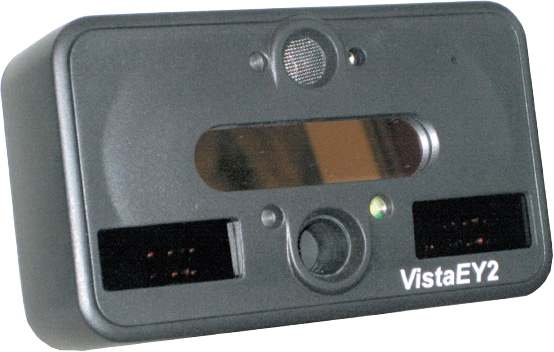
Vista Imaging makes four iris cameras that we supply: the EY2, the EY2-02 (EY2P), the handheld EY2H and the FA2. They share the same core, near-infrared iris capture with ISO/IEC 19794-6 images and built-in anti-spoofing, and differ in how many eyes they capture at once, whether they take a face photo and where they are meant to stand. This comparison should help you pick one for enrollment or verification.
The four models
| Irises | Face photo | Form | Notes | |
|---|---|---|---|---|
| EY2 | Both, at once | Yes | Desktop | Captures through glasses; distance sensing for automatic capture |
| EY2-02 (EY2P) | Both, at once | Yes, at the same time and distance | Desktop | Iris and face from about 56 cm (22 in); cold mirror, LED indicators, microphone and speaker |
| EY2H | Both, at once | No | Handheld or tripod | Visor against ambient light, built for field enrollment |
| FA2 | One | Yes | Compact, 94 × 94 × 54 mm, 0.18 kg | For desks, kiosks and embedded installations |
All four connect over USB 2.0, use multi-wavelength infrared illumination and include LiveEye anti-spoof detection. The manufacturer lists Windows and Linux support.
Dual or single iris?
For enrollment and de-duplication, capture both eyes. Two independent irises make a 1:N search far more robust: requiring both to agree cuts false matches by orders of magnitude, and if one eye is injured or covered the other still identifies the person. A dual camera takes both in one look, which also shortens the queue.
For verification at a later visit, one eye is usually enough. The person claims an identity and the camera confirms it, so a smaller, cheaper single-iris camera such as the FA2 does the job at a counter or a clinic desk.
Face photo or not?
A face image taken in the same capture is useful for the card, for an operator's visual check and as a fallback when iris capture is impossible. The EY2 and EY2P take it at the same time as the irises; the EY2H leaves it out to stay light and handheld.
Which one where
- Registration desk, national or program enrollment: EY2 or EY2P.
- Mobile teams and field registration: EY2H.
- Branch counter, clinic reception, kiosk verification: FA2.
- Agents with a laptop or Android tablet and a tight budget: a monocular USB iris scanner, see pricing.
Software
The cameras produce standard ISO/IEC 19794-6 iris images, so they work with our iris recognition SDK and cloud de-duplication as well as with the manufacturer's Raven enrollment software. Prices and lead times depend on the model and the destination country; ask us for a quote.